Composite Tooling & Carbon Fiber

Composite tooling and carbon fiber parts, made in Irvine, California.

RACE designs and machines composite tooling — molds, patterns, and production tools — and manufactures carbon fiber parts for automotive OEMs, mobility companies, and commercial partners.

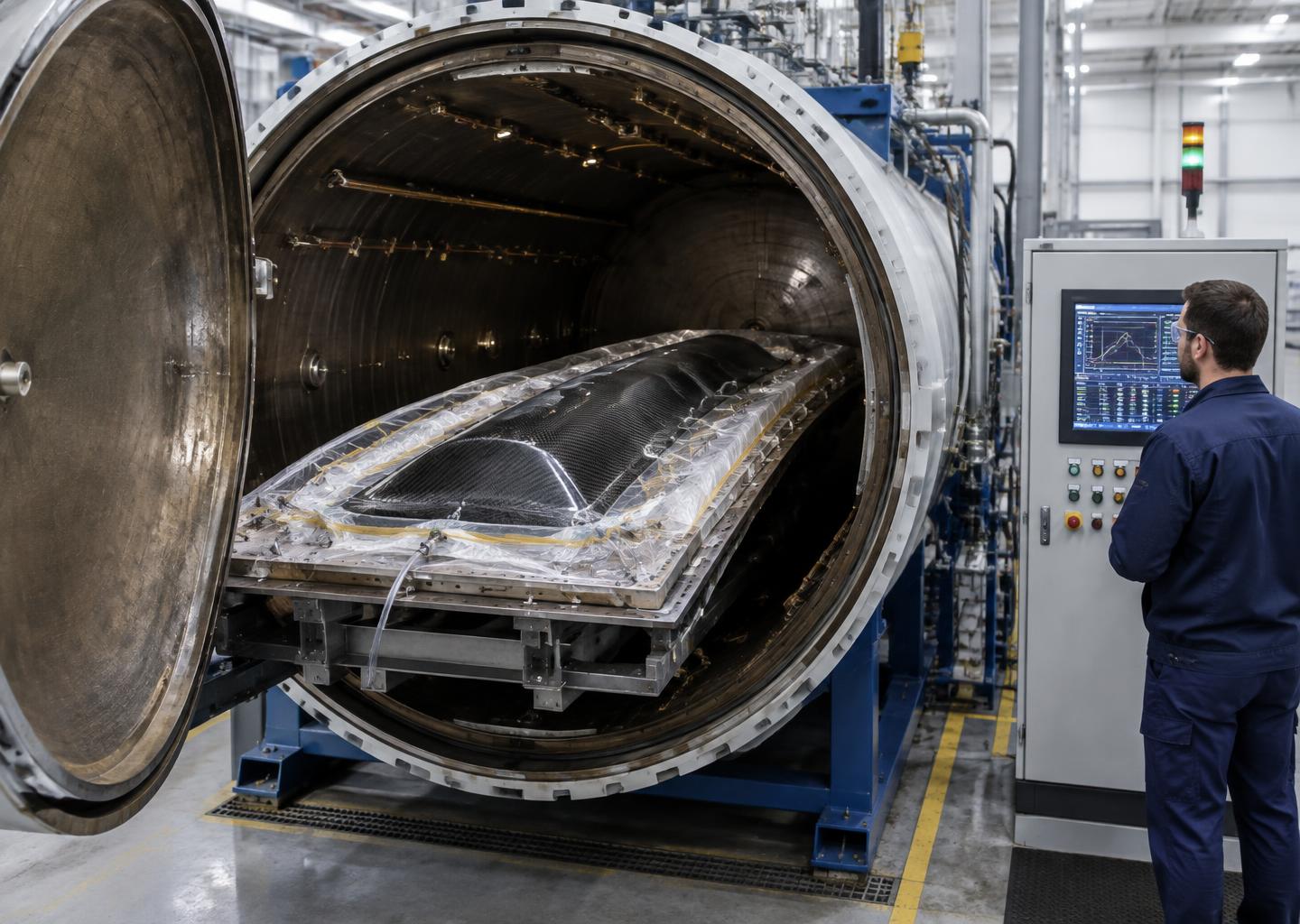
Tooling is machined in-house on 3 and 5 axis CNC equipment, parts are laid up and cured in our composite oven, and finished components are fit-checked against the vehicle, all under one roof in Southern California.

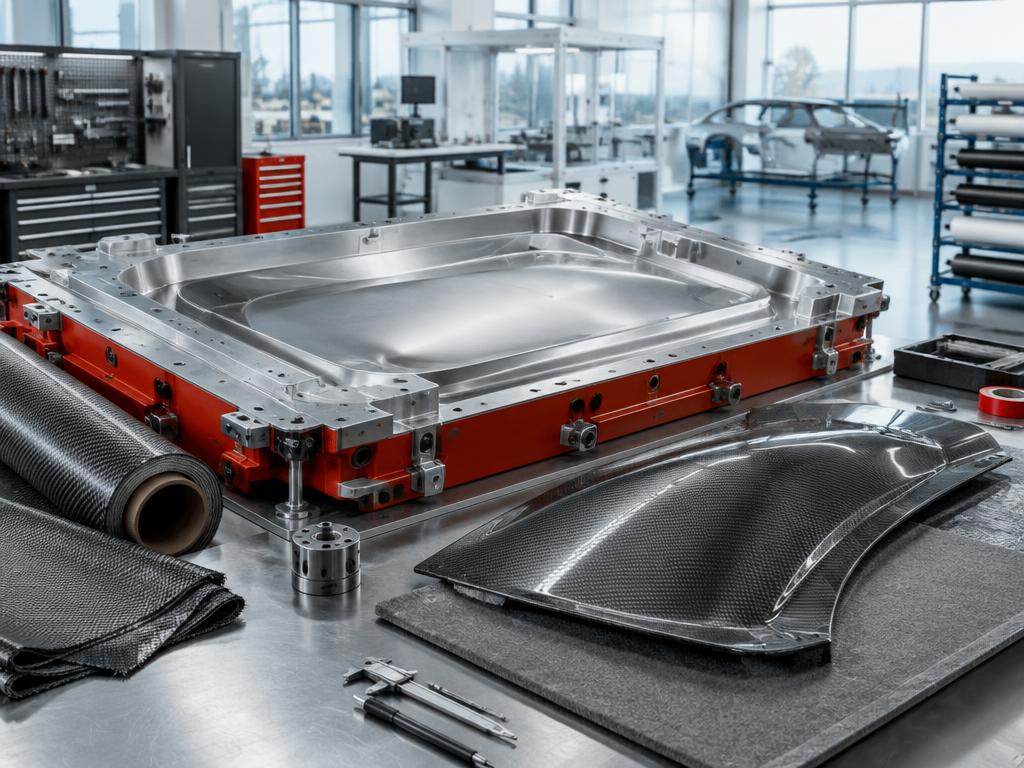
Composite tooling mold machined at RACE in Irvine, California
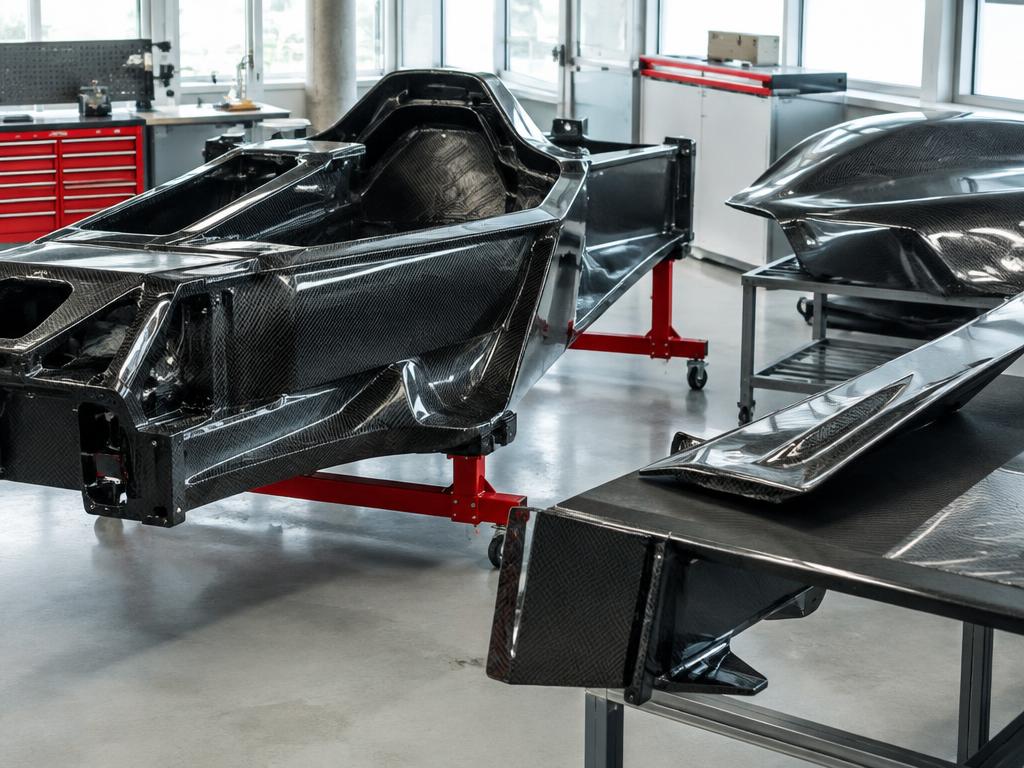
Carbon fiber vehicle part manufactured by RACE

What we deliver

  • Composite molds, patterns, and production tooling for repeatable part quality.
  • Carbon fiber body panels, structural components, and interior parts.
  • 3 and 5 axis CNC machining of tooling and complex geometry.
  • Controlled-cure composite oven processing, from prototype panels to full vehicle structures.
  • 3D printing and prototyping to validate fit before tooling is cut.
  • Low volume production runs for the automotive industry and mobility sector.

Based at 16752 Millikan Ave, Irvine, California, USA. Call (949) 208-7184 or email sales@rezvanimotors.com.

Technology

The latest in carbon fiber technology for aerospace, automotive, and race cars.

Carbon fiber methods have split into a family of processes, each tuned to a different balance of quality, volume, and cost. This is how the best parts in aerospace and motorsport are made today — and how we choose the right route for each program.

Prepreg and autoclave — the aerospace and race benchmark

The reference process for aerospace structures and Formula-style race parts is pre-impregnated carbon fiber (prepreg) cured under pressure in an autoclave. Prepreg tow or fabric arrives pre-coated with a precisely metered resin system, so every ply carries exactly the fiber and resin content the laminate was engineered for — no hand-mixing, no guesswork.

Plies are cut from nested patterns, laid up over the tool in a defined ply book, debulked under vacuum at intervals, and sealed in a vacuum bag. The autoclave then applies 3–7 bar of consolidation pressure while the part ramps through a controlled cure cycle, typically around 180°C (350°F) for aerospace epoxies and up to 230°C for high-temperature race systems.

The result is a laminate at roughly 60% fiber volume with void content below 1% — the difference between a part that survives a crash structure load case and one that delaminates. This is the process behind monocoques, wishbones, diffusers, and wing assemblies where every gram and every layer count.
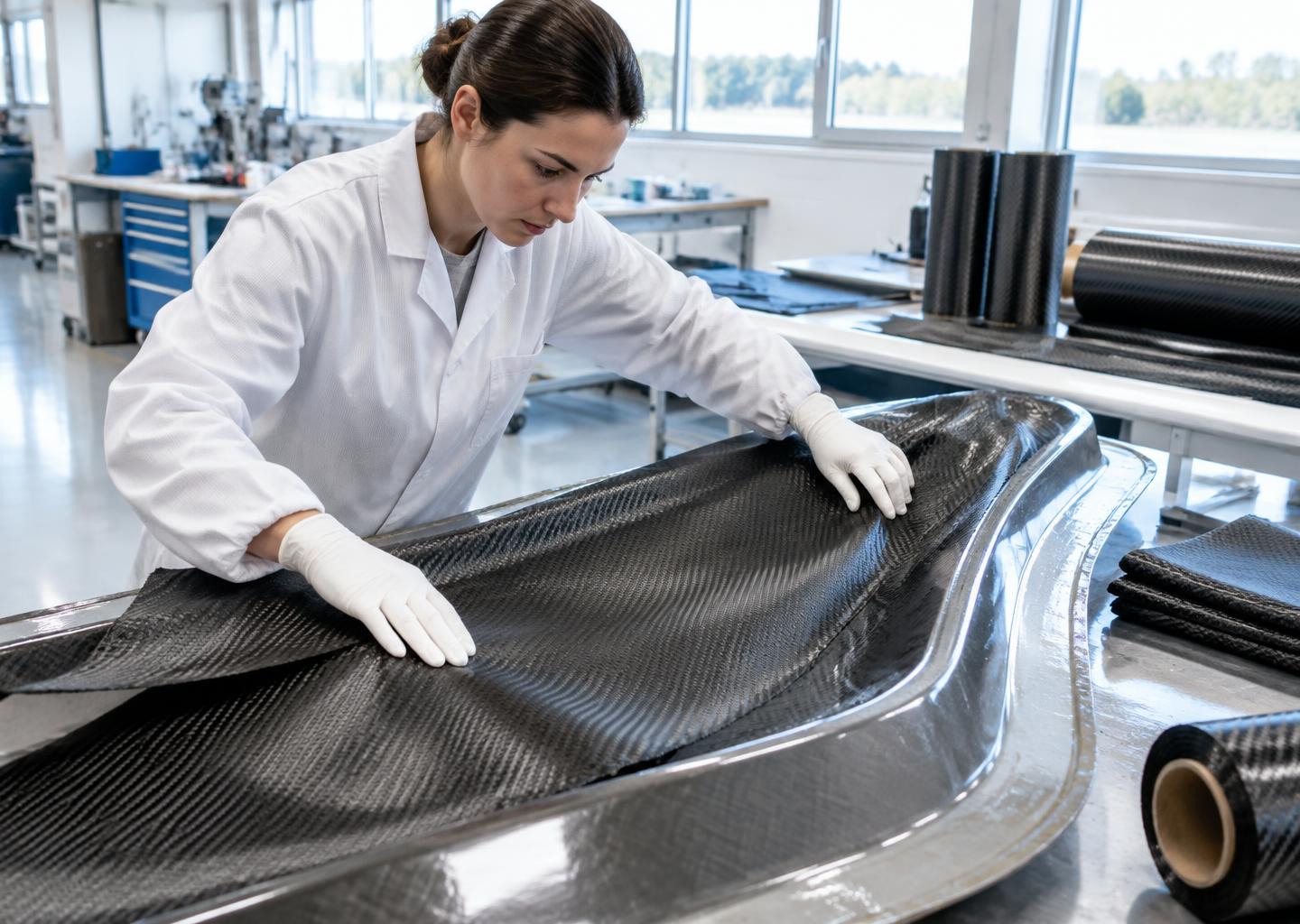
Technician laying carbon fiber prepreg plies onto a mold in a clean workshop

Automated fiber placement and tape laying

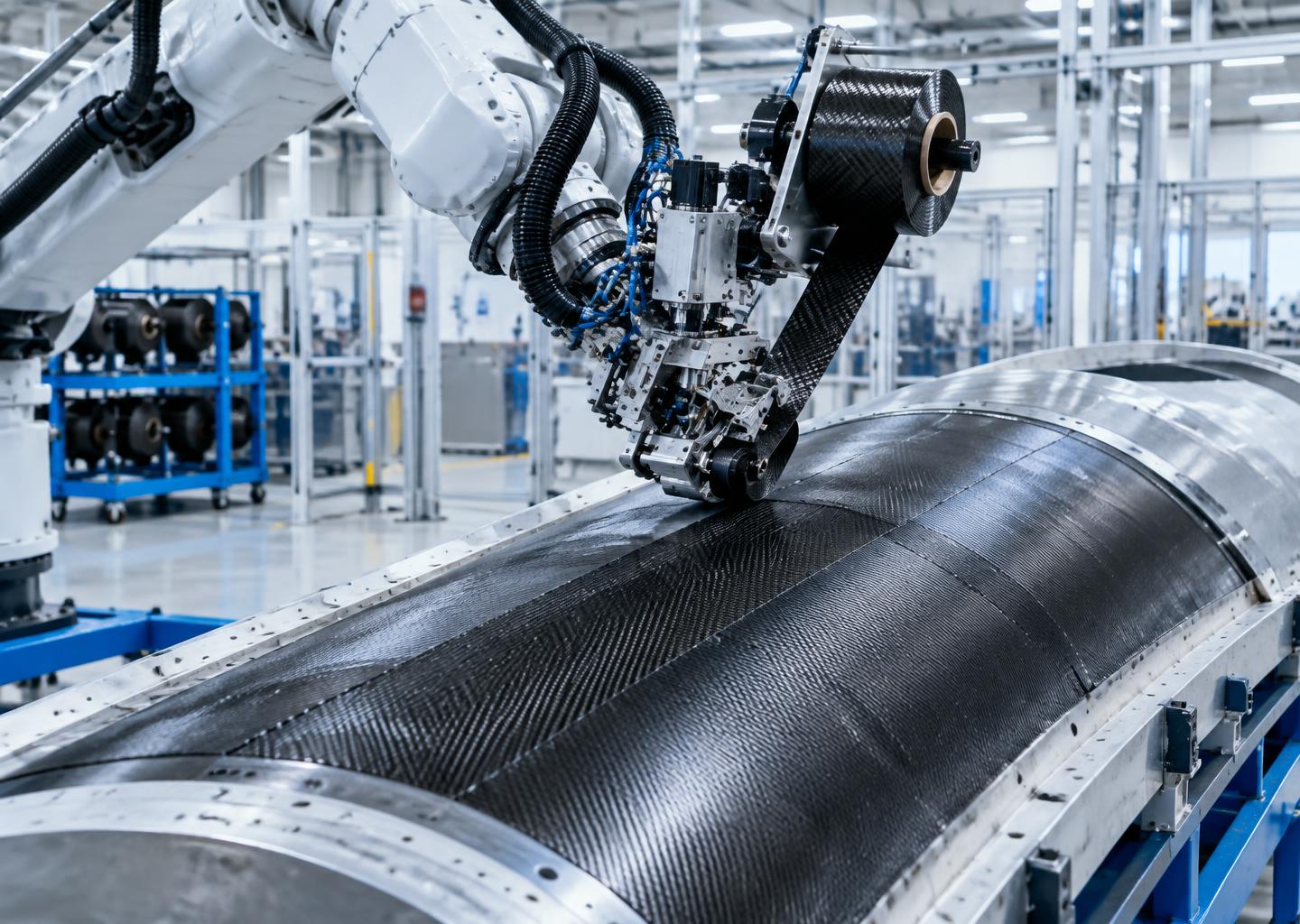
For large or highly contoured structures, automated fiber placement (AFP) and automated tape laying (ATL) machines steer narrow carbon tows or wide prepreg tape over the tool under computer control. The head lays material along computed fiber paths, cuts and restarts individual tows, and consolidates each course with a roller as it goes.

Automation matters for three reasons: repeatability, geometry, and speed. A robot places fiber along curvilinear paths a hand cannot hold, holds a consistent compaction force and temperature across every meter, and lays up large aerostructures and body panels in a fraction of manual time. Steered-tow placement also lets engineers align fibers with load paths — following the flow of force around a cutout or along a spar — extracting more stiffness from the same weight.

Robotic fiber placement head laying carbon fiber tows onto a large curved mold

Out-of-autoclave prepreg — aerospace quality without the pressure vessel

Out-of-autoclave (OOA) prepreg systems achieve aerospace-grade laminates in a vacuum oven alone. Newer resin chemistries absorb entrapped air and volatiles during the cure ramp, so the vacuum bag does the consolidation work pressure normally does. Cured laminates routinely meet the sub-2% porosity targets that certification requires.

OOA opens carbon fiber to programs that don't justify autoclave capital or cycle time: large tooling, body panels, interior structures, and low-volume production where autoclave size would otherwise cap the part. Cure is slower than press or autoclave processing, but the equipment and energy cost per part drops sharply.

Resin infusion and RTM — clean, repeatable, production-ready

Liquid molding flips the process: dry fiber goes in the tool first, resin is introduced second. In vacuum-assisted resin transfer molding (VARTM, or resin infusion), a vacuum draws low-viscosity resin through the fiber preform, wetting every layer without hand saturation.

High-pressure RTM (HP-RTM) goes further — dry preform in a matched, rigid metal mold, resin injected at high pressure, cure accelerated at elevated temperature, part demolded in minutes. Matched tooling gives two finished surfaces, tight thickness control, and cycle times that make carbon fiber viable at automotive production volumes. This is the path high-volume programs take for structural components that need dimensional precision on both faces.

Infusion and RTM share one decisive advantage for low-volume work: repeatability. Once the preform, resin, and injection parameters are locked, part 50 matches part 1.

Thermoplastics and fast-cure systems — the newest frontier

Thermoplastic composites are the fastest-moving area in carbon fiber. Instead of a thermoset resin that cures once, thermoplastic matrices (PEEK, PEKK, PA, PP) melt when heated and solidify when cooled — so parts form in minutes, are weldable to each other, recyclable, and far tougher in impact than epoxies.

Overmolding takes it further: a continuous-fiber organosheet stamp-formed into shape, then injection-overmolded with ribs and bosses in one press cycle. Aerospace interior brackets and high-rate automotive structures are moving here fast, because it collapses a hand layup plus assembly into a single automated press operation.

Alongside them, snap-cure epoxy systems now cure in minutes at moderate temperature in matched dies — a middle path that keeps thermoset processing but reaches automotive takt times.

What separates a great carbon part from a good one

Material choice is the easy part. Laminate quality comes from the details around it:

Fiber architecture. Every ply's orientation and position in the stack is engineered against the load case — quasi-isotropic where loads are mixed, ±45° for torsion and shear, 0° along spars and uniaxial paths. A well-designed ply book puts strength exactly where the structure needs it and nowhere it adds weight.

Tooling. Carbon cures at temperature, so the tool's coefficient of thermal expansion matters as much as its surface. Invar and composite tooling hold aerospace tolerances through the cure cycle; CNC-machined epoxy tooling boards serve prototype and low-volume work; matched metal tooling defines both faces in RTM. Tooling choice sets the cost, lead time, and accuracy of everything downstream.

Process discipline. Debulking at the right intervals, vacuum integrity verified before cure, thermocouples on the part — not just the oven — and a logged, repeatable cure cycle. Most carbon failures trace back to a skipped debulk or a bag leak, not a bad resin.

Verification. Ultrasonic inspection and tap testing find voids and disbonds; CMM scanning and fit-checks confirm the part meets the vehicle. A carbon part isn't finished when it demolds — it's finished when it's verified.

Vacuum-bagged carbon fiber part loaded into an industrial autoclave for cure